MENU
Select from the options below to jump to a specific section.
Materia Poetica
Your bite is harsh, your sting is strong
Your tea works well when spring is long
For allergy symptoms can get you down hard
But your nourishment is a personal guard
People of old made sailcloths and fish nets
From your stems they made cordage and fine cloth assets
Fresh leaves were used for strength and good fortune,
While dry leaves were used for boundaries and protection
Many used your sting to increase circulation
And rid pain and soreness through blood stimulation
You came to the Americas as an immigrant plant
And settled in nicely where its disturbed and damp
The other plants like you as your very supportive
To share all those nutrients that everyone’s in need of
The birds like you too, for your seeds taste so yummy
And the butterflies thank you as their larvae nursery
Stinging Nettle – strong mix of such pain yet deep nurture
We respect you and love you and honor you forever.
Materia Magicka
Work with nettle when you need to amp up cord cutting or boundary spells. The tiny stinging hairs of the plant are a subtle telltale sign that if you get too close, you’re going to feel a sting.
Nettle is a deeply nourishing friend that, if you can handle the sting, will make you stronger and will protect you from outside forces to allow you to find the good fortune you seek. If your good fortune includes sealing a business deal, agricultural abundance, or seeking protection while traveling, making an offering of nettle to Thor is recommended.
Stinging Nettle is also great for clearing spaces of anger and abuse.
- cord cutting
- boundary spells
- bring good fortune
- clearing hostile spaces
Below is some of the symbolism associated with Nettle.
| Planets: | Constellations: |
| ♂️ Mars | ♈️ Aries, ♑️ Capricorn |
| Element: | Chakra: |
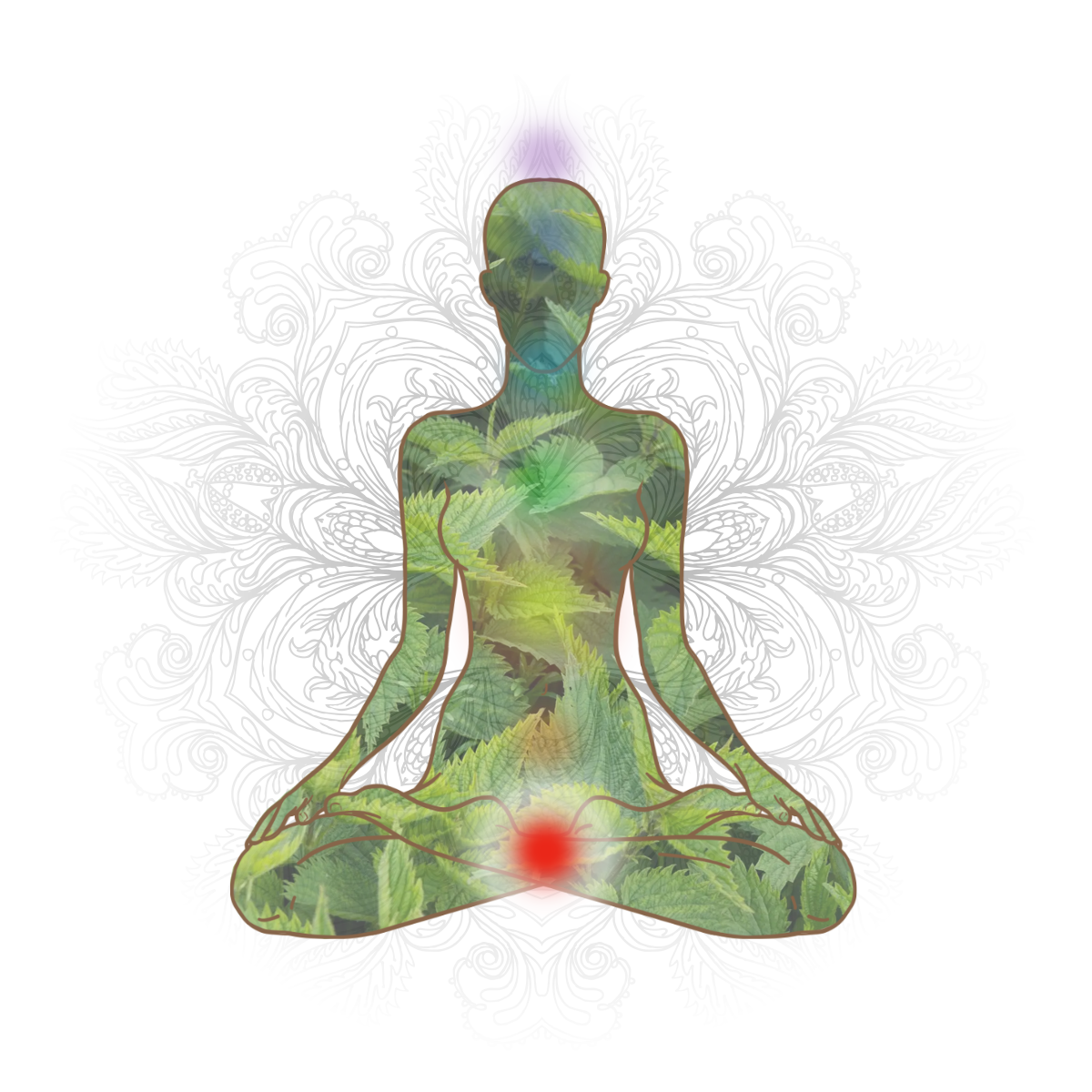
| 🜂 Fire, 🜃 Earth | ◉ Root Chakra |
| Energy: | Crystals/Stones: |
| ☯ Yang | Emerald |
| Day of the Week: | Spirit Animals: |
| Monday | Coyote |
| Deities: | Tarot: |
| Norse: Thor Hindi: Agni Greek: Hecate Egyptian: Isis |
Major Arcana: Justice |
Stinging Nettle Garden Abundance Ritual
As I write this, spring is right around the corner. My mailbox brings catalogues filled with the promise of abundant flowers, vegetables, and herbs of every species and variety.
Create your sacred space, whether it is setting up an altar, lighting a candle, or calling the quarters and setting a sacred circle. Your way is yours and nothing is “right” or “wrong.”
*Please note that all spells you read (including this one) should be considered a guide, as your intuition and intention are the power behind them.
What You’ll Need:
- Some seeds for your garden
- Whether your “garden” is a pot, a window box, a raised bed, or a plot of land
- Dried nettle – enough to sprinkle around your garden and a cup of tea
- You can always buy nettle tea bags and break them open for the garden sprinkles
- A drum, rattle, or rhythmic instrument of your choosing – hand clapping works too.
- A tea kettle and tea cup
Preparations:
- Boil water in your tea kettle, enough to make a cup of tea for yourself
- Let your tea steep for at least 15 minutes to extract the herbal goodness
- Take a handful (or more) of your dried nettle to your garden
- Plant your seeds and meditate over them. Envision them growing into strong and healthy plants
- Sprinkle the dried nettle around the seeds, keeping your vision in your mind
We are all energetic beings, so get out your drum, rattle, or rhythmic instrument and start with a steady beat.
Pour yourself a cup of this nourishing tea and feel the nourishment pouring into your body like spring rains soak new seeds, becoming one with every part of your physical and spiritual self.
Song/Incantation: Dave Mallett’s “Garden Song”
While the tea seeps through your body, chant/sing the following as you walk around your garden:
With every sip of your tea, feel every part of your being fill with abundance for those tiny seeds. If you don’t know the above song, you can here it for free on YouTube.
✨💖 ✨ Blessed Be. ✨💖 ✨
Folklore & History
Stinging Nettles have shown up throughout history in references and records from the Greeks, Romans, Europeans, and Indigenous People of Turtle Island.
Records show as far back as the Late Bronze Age, or between 1570 and 1200 BCE, that Romans would whip their skin to stimulate blood flow as cold-weather protection and to treat ailments.
The 10th-century Lacnunga contains an invocation called the Nine Herbs Charm, which includes Wergulu (nettle) as one of the Old English plant names listed in the charm.
It is said that the name “nettle” comes from the Anglo-saxon word Netel, which may come from the word noedl, meaning needle – as in the sharp prickles which give this green ally its sting.
Nettle is considered a liminal gatekeeper plant – a plant of crossroads. It has deep roots and aerial parts reaching for the sun (as above, so below) and has strong associations to growing along the perimeters of graveyards. It was used in magical rituals, such as burning it to ward off storms or placing it under pillows to divine the fate of the sick.
In Norse and Saxon mythology, nettle is a plant of Muspelheim, one of the nine worlds. Muspelheim is the “Realm of Fire,” filled with lava, flames, sparks, and soot and is the birthplace of the Sun and Stars, as well as the world of fire and giants. It is said that putting fresh nettles into your home hearth will keep evil, bad luck, and danger away for the coming days for all who live under your roof. If you cast rolled up dried nettle leaves into your fire, any curses sent to you will be returned to their sender.
Click the image below to hear about nettle folklore.
HERBAL FOLKLORE: Stinging Nettle and The Silvano
Sit back and enjoy this story of how stinging nettle fought back against the weather spirits.
Moving into the Indigenous People of Turtle Island, the Makah in northwestern Washington prepared hunters for their whale hunts by rubbing fresh nettles on their bodies to bring them strength and good fortune. Much like modern day Columbian curanderas, he Hesquiaht and the Miwok peoples used the plant to relieve muscle and joint pain, whipping the affected parts of the body to bring on increased circulation with the sting. Moving away from the sting and into the deep nourishment nettle has to offer, the he Cherokee made a tea from the plant as a stomach tonic and the Cree considered it an important herb for women during childbirth.
In indigenous folklore of the Americas, nettle is connected to coyotes which not only represents cleverness but also trickery.
In addition to medicinal and spiritual uses, nettle has its place in the mundane practical world, where many cultures in history have used the fibers to weave sailcloths, bowstrings, fishing nets and cordage.

Urtica dioica L.
Stinging Nettle
You only have to touch Stinging Nettle once with bare hands to see where its name originates. Urtica dioica L. is in the family Urticaceae (Nettle Family) who’s name come from the Latin uro (“I burn”).
The tiny bristly stinging hairs that cover the stems create a highly irritating sensation to the skin that can also develop into a rash. This sting is caused by silica-tipped hairs (trichomes) injecting histamine, acetylcholine, serotonin, and formic acid. Many cultures have and still do use the plant’s sting through a practice called urtication, or “whipping the skin” to treat rheumatism, however, the very young shoots and top leaves of nettle may be cooked and served as greens or used in soups and stews.
Ecology Information
Urtica dioica L. is native to Europe, much of temperate Asia and western North Africa, but has been introduced throughout the world, growing in gardens, hedgerows, fields, woodlands and many other habitats where there is damp, fertile and disturbed ground.
It attracts butterflies and is a larval host for the Question Mark butterfly (Polygonia interrogationis), the Milbert’s Tortoiseshell butterfly (Aglais milberti), and the Red Admiral butterfly (Vanessa atalanta).
A wide variety of pollinators are attracted to nettles, including bees who forage on their flowers for nectar. Since nettles flower in late spring and summer this helps to fill a gap in the availability of nectar for pollinators when other plants aren’t in bloom. By supporting pollinators, nettles play a crucial role in maintaining the health of other plant species and the ecosystem as a whole.
Nettles are also beneficial to birds because their dense foliage offers shelter and protection to nesting birds, particularly during the breeding season. Some bird species, such as finches and sparrows, feed on their seeds, especially during the autumn and winter months. This helps disperse the seeds, helping nettles spread to new areas.
But nettle is just not important to the pollinators and birds. Neighboring plants rely on nettle’s unique ability to extract sodium, sulphur, nitrogen, calcium, potassium, iron, and copper from the soil and enhance the defense mechanisms of neighboring plants, providing increased resilience against pests and diseases.
References
The following sources were used to research the above information.
- Bundy, S., & Belew, K. (2023). Wild medicine: An Illustrated Guide to the Magick of Herbs. Sasquatch Books
- Lady Bird Johnson Wildflower Center – the University of Texas at Austin. (n.d.). https://www.wildflower.org/plants/result.php?id_plant=URDI
- Stinging Nettle (RWMWD Plant Guide) · iNaturalist. (n.d.). iNaturalist. https://www.inaturalist.org/guide_taxa/1425421
- Katy. (2025, August 11). The prickly charm of stinging nettles. Tortworth Arboretum. https://tortwortharboretum.org/the-prickly-charm-of-stinging-nettles/
- LeBaron-Botts, P., & LeBaron-Botts, P. (2019, April 26). Two burning houses: A natural history of stinging nettle – North Cascades Institute. North Cascades Institute – Connecting people, nature, and community since 1986. https://blog.ncascades.org/naturalist-notes/two-burning-houses-a-natural-history-of-stinging-nettle/
- Bishop, M. (2020, December 3). Stinging Nettles — Old Ways wisdom. Old Ways Wisdom. https://oldwayswisdom.com/musings/stinging-nettles
- Clark, A. (2024b, June 11). Beyond the benefits of stinging nettle: environmental, medicinal, and spiritual meaning — nectar yoga. Nectar Yoga. https://www.nectaryoga.ca/nectar-blog/beyond-the-benefits-of-stinging-nettle-a-herb-with-environmental-medicinal-and-spiritual-significance
- Mark, J. J., & Rannveig. (2025). Thor. World History Encyclopedia. https://www.worldhistory.org/Thor/
- The Nine Herbs Charm: Plants, Poisons and Poetry. (2023, December 12). Herbal History Research Network. https://www.herbalhistory.org/home/the-nine-herbs-charm-plants-poisons-and-poetry/
- Woodlarker. (2024, December 30). Nettles: Folklore of Wergulu. Woodlarking. https://www.woodlarking.co.uk/post/nettles-folklore-of-wergulu
- Nettles: Magic, Myth & Medicine. (n.d.). https://www.seraphinacapranos.com/blog/nettles-magic-myth-medicine